
HOKKAIDian Homestead might be one of the best tables in northern Japan, and the best part is, you get to be in the kitchen where the magic happens.
Dorothy once said there’s no place like home, I’m here to say: there’s no place like HOKKAIDian Homestead.
There’s a reason adding ‘Hokkaido’ in front of any ingredient makes it sound immediately better. The dairy, the seafood, and even the potatoes all have a certain gastronomic je ne sais quoi. Spend a day with Ian Fong, the founder of HOKKAIDian Homestead, and you’ll understand why.
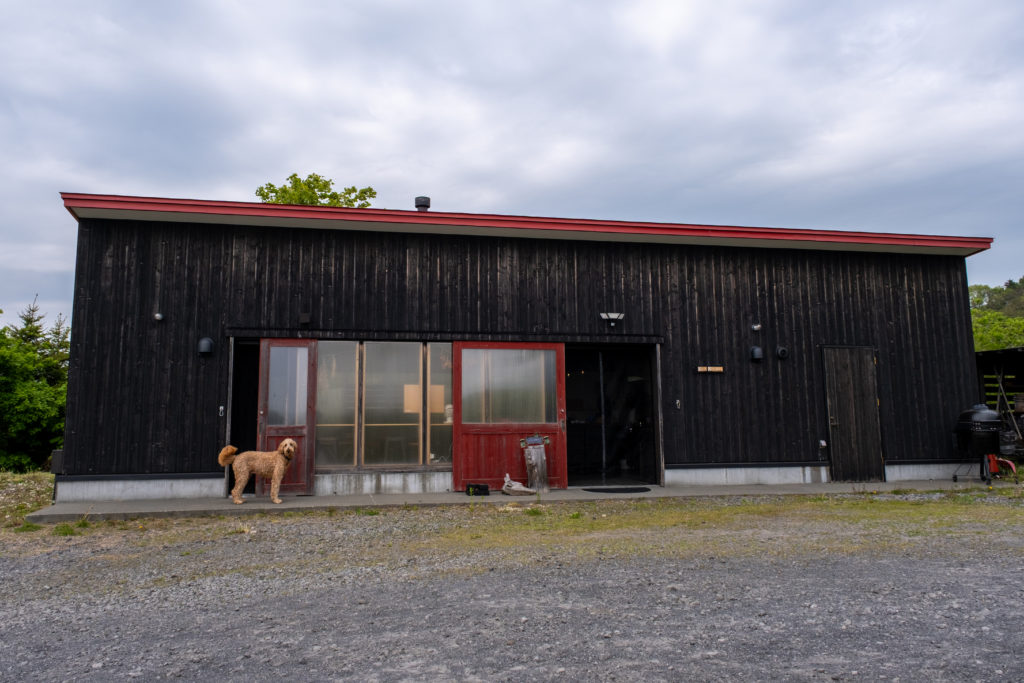
On a rustic five-acre hilltop in Date, just an hour’s drive from Niseko, sits a homestead with Uchiura Bay below, Lake Toya on one side, and flanked by two active volcanoes on the other side. Usu, the big one — “the mother,” Ian calls it — and Showa Shinzan, a smaller volcanic dome that rose from farmland in the 1940s. The volcanic ash that settled into this soil turned it into extraordinary fertile land. “If you just drop a seed into the soil, the plant will come,” Ian says.

From his deep ties and collaboration with the local farming and fishing community, Ian, along with his wife Noriko, built an experience designed to showcase Hokkaido’s bounty from land to sea. The rice from his neighbour’s field. Snow crabs from the bay. Cauliflower that came into season just two weeks before my visit in May. Farm-to-table is an overworked phrase, but it’s true of the experience here.
Here’s how I spent my day with Ian, his wife Noriko, and their doodle Toby, who wanders the homestead with the confident stride of one who knows he’s in a special place.
Get to know Ian and Norikotoby: An interview with the founders of HOKKAIDian Homestead
Hands on Deck: Inside the Hokkaidian Homestead Kitchen
HOKKAIDian Homestead runs year-round, hosting one group a day from 11am to 3pm, though the couple will happily let it stretch if the conversation is good (which it will be). As expected, the menu changes with the seasons. During my visit in May, it was built around spring vegetables, pork shoulder, live scallops, and snow crabs from the bay.
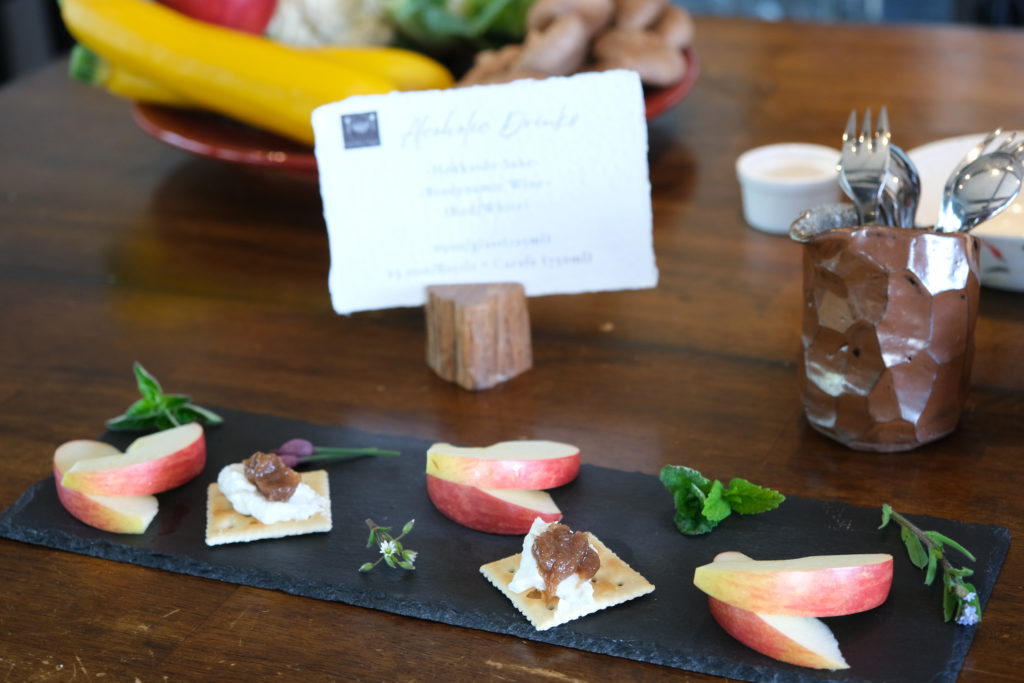
The day begins with a welcome spread: canapes, a simple soft-boiled egg so fresh it needs absolutely nothing on it, and Noriko’s sun tea made by steeping fresh herbs in water and leaving out under the sun. It is a warm and unassuming introduction to a day in the kitchen. Everything that follows only gets better.
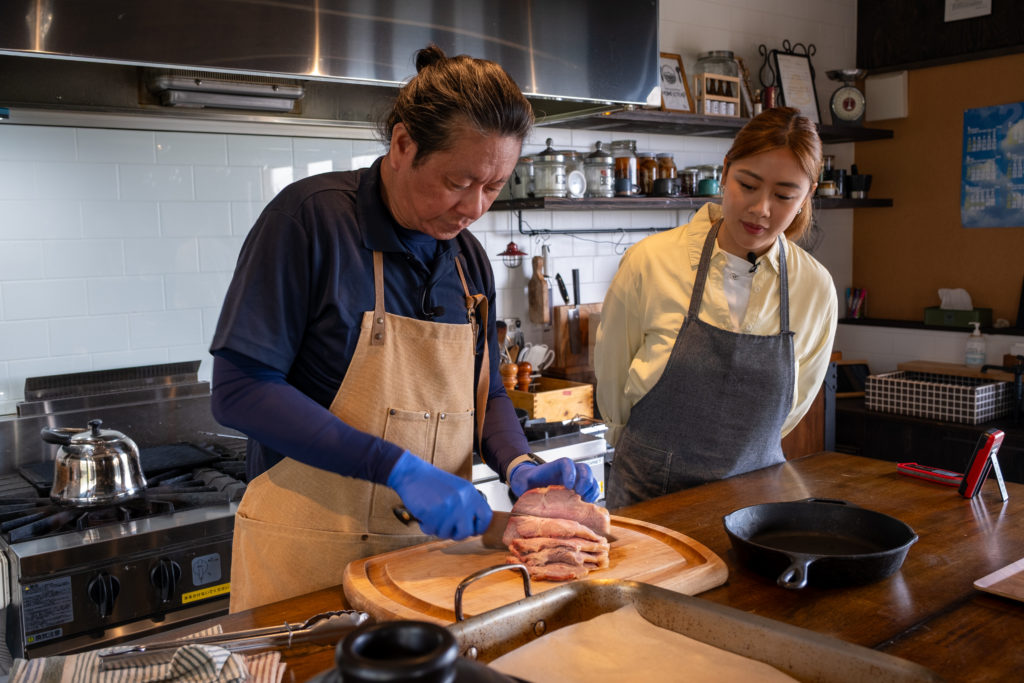
The experience is fairly hands-on, which can sound intimidating if you don’t know your way around a kitchen. Ian walks you through every step, so you gain confidence with time: the knife skills, the reasoning behind each technique, and the why as much as the how.
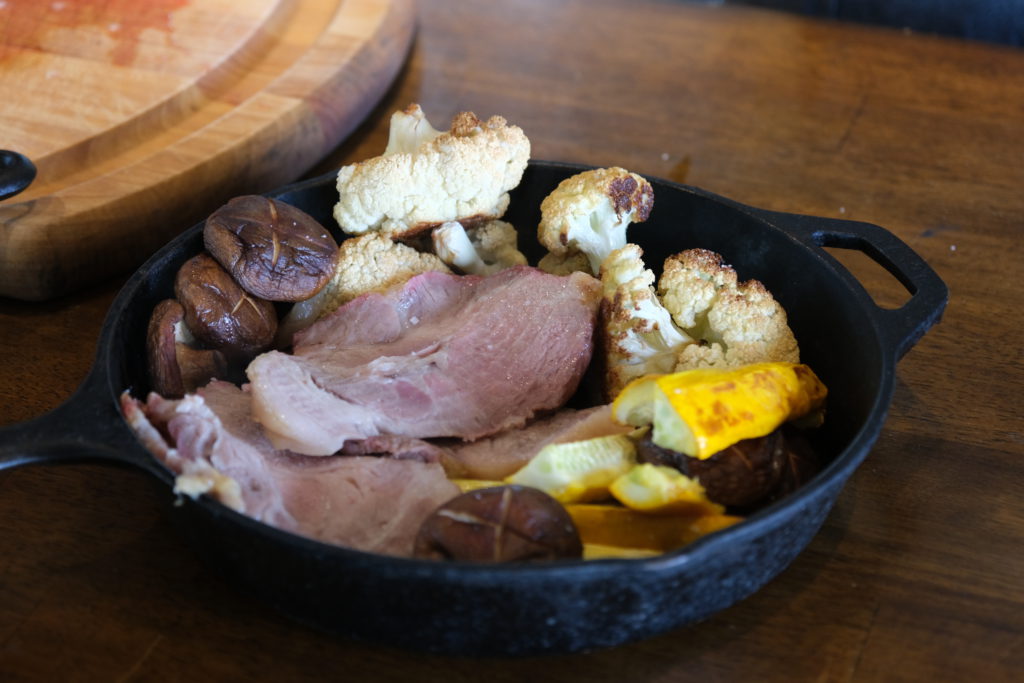
We started with the vegetables — cauliflower, zucchini, mushrooms — prepping them to roast alongside the Makkari pork. Ian had already seasoned the shoulder with salt, and only salt. “That way you can really taste the flavour of the pork,” he explains. The cauliflower had just come into season, and the yellow zucchini, Ian admits, “Seems sweeter, because it just looks sunnier, you know, happier.”

From Strawberries To Pears: Your Complete Guide To Fruit Picking In Niseko
Hokkaido Kaisendon: Scallops, Snow Crab, and Kani Miso

Ian disappeared outback and returned with a tray that made me audibly gasp. Fresh scallops and snow crabs from the bay — smaller than the famous ones caught further up north in the Sea of Okhotsk, the icy stretch between Hokkaido and Russia. The smaller snow crabs, Ian explains, are more manageable and, arguably, more flavourful.
The crabs had been cooked the day before and left overnight in the refrigerator. Freshly cooked crab meat is too soft, so the few hours in the fridge firms the flesh up just right. We shucked the scallops ourselves and broke down the crabs from there. There’s footage somewhere of me cutting off a crab leg and sending it flying. I guess I got a little too excited.
Then there was the kani miso, or the tomalley: the creamy, intensely flavoured part tucked inside the crab shell. Ian uses the shell itself as a serving bowl for it. “Most of our Asian guests love it,” he says. “Many of our non-Asian guests find it a little bit strange. But I’ve always encouraged them to try a little bit, and most of them go crazy for it.” He is correct on all counts.
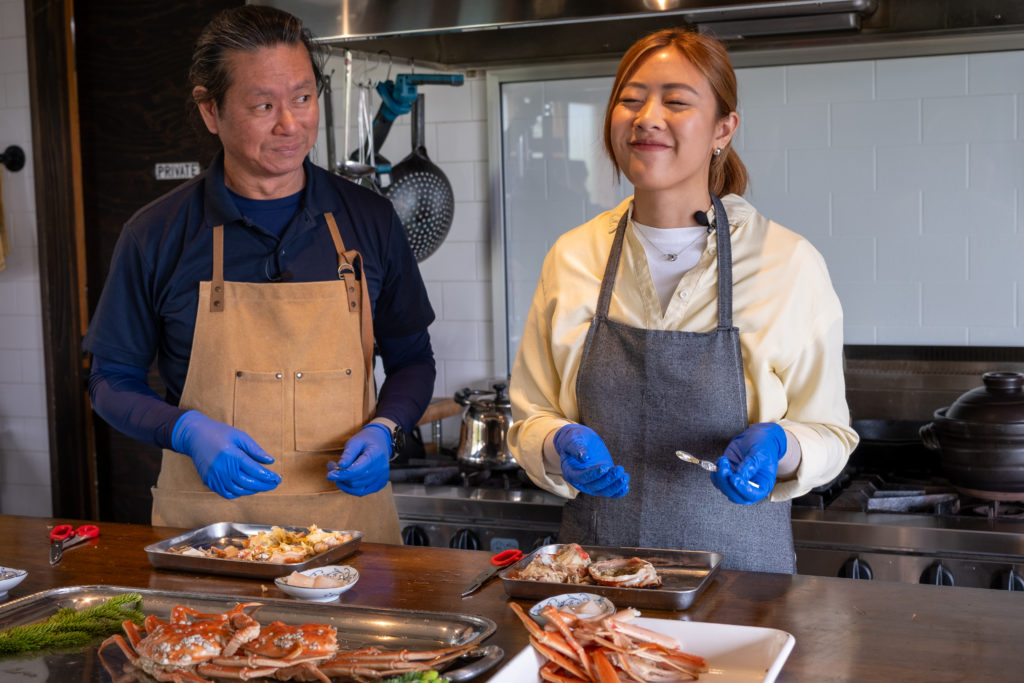
We then assembled our kaisendon: a fresh seafood rice bowl, topped with our shucked scallops and snow crabs, finished with a shiso leaf, and a sprinkle of seaweed over the top. Ian insists you smack the shiso before using it. He asks you to smell it before, and then after. Agitating it releases something floral and minty that transforms the leaf’s aroma entirely. This is what I love about cooking: small things often make the biggest difference.
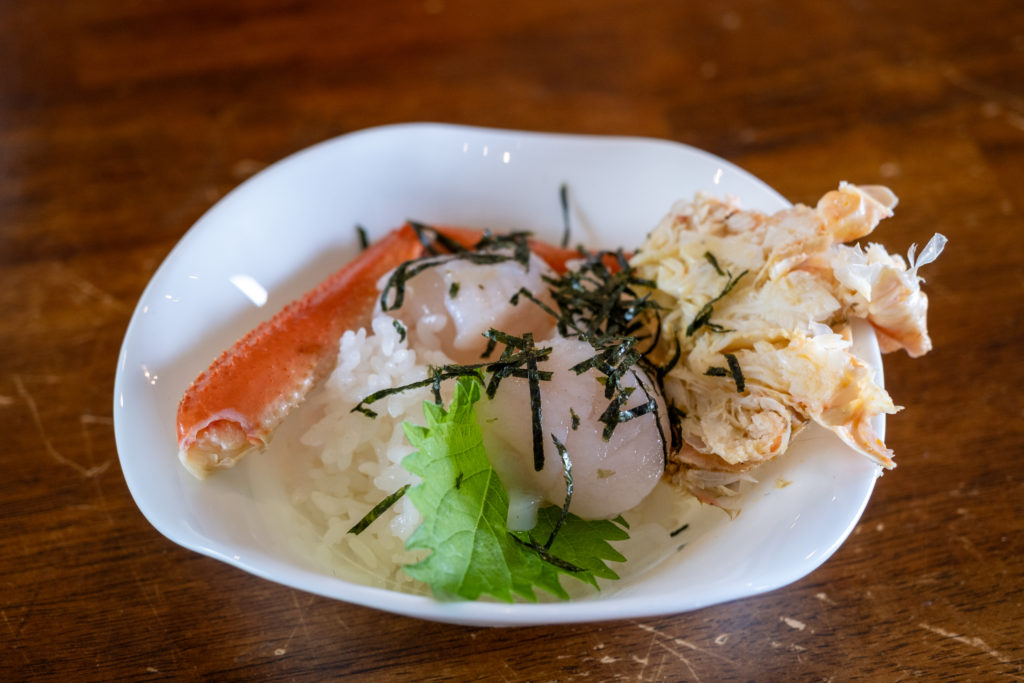 The finished product: kaisendon.
Ian Fong’s Farmer-First Philosophy
The pork shoulder, roasted along with our chopped vegetables, came out of the oven just as we finished our seafood bowls — a hearty follow-up after the kaisendon, with tender meat and deep flavours created by the salt Ian had trusted to do the work.
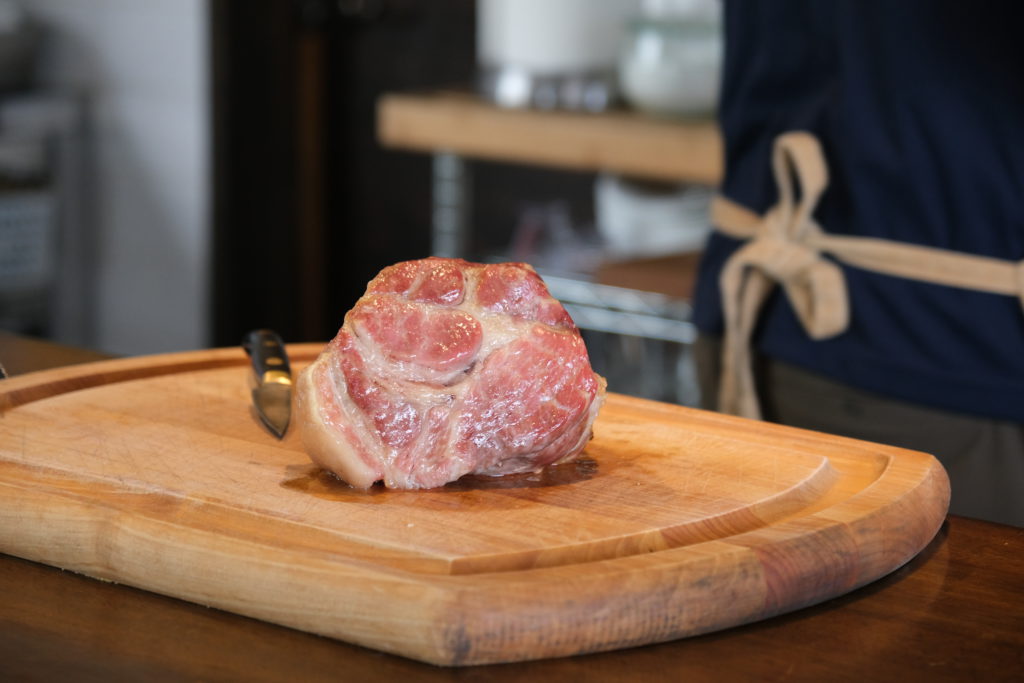
“My style of cooking is to keep everything simple, using just good seasoning,” he says. “The reason for that is to let the natural flavour of the ingredients come out. I have people ask me how much of this is you as a cook, or how much of this is the work of the farmers. I would say 90% farmers. I just put in the finishing touches.”
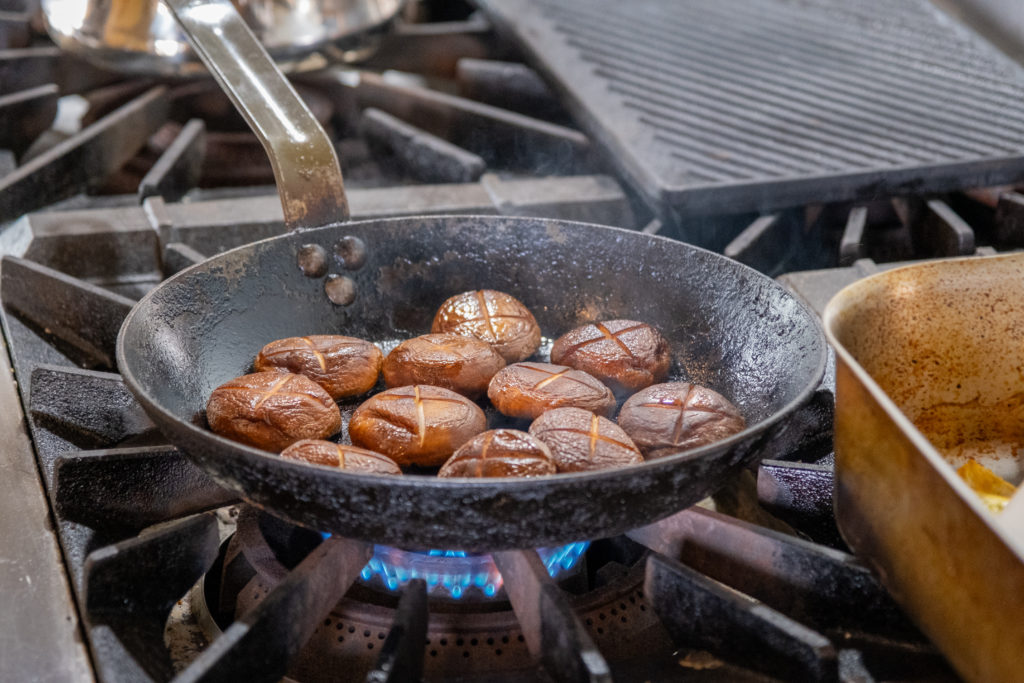
The vegetables were perfect, too. The mushrooms went into a cast-iron pan and were pressed down for an even char, coming out golden and earthy. Same went for the cauliflower, the zucchini, the pork. There was no drowning in sauce or spice, just letting the quality of the produce do the talking.
More Than a Meal: The HOKKAIDian Homestead Experience
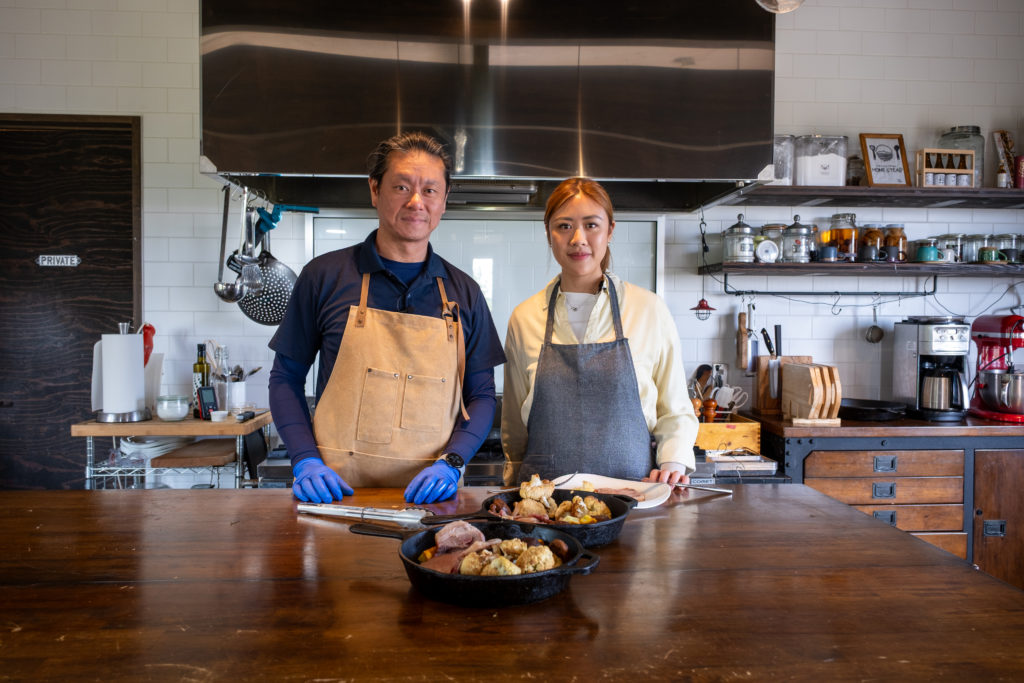
The food that day was flawless, but what HOKKAIDian Homestead offers goes beyond what’s on the plate. It’s less of an interactive multi-course meal and more like being invited into a family’s kitchen for a gathering: eating food I’d helped prepare with my own hands, at a table with people who know every ingredient by name and provenance, in a valley watched over by two volcanoes that have been enriching the soil for decades. The experience is the main course. The meal is just the cherry on top.
We lingered over coffee afterwards, talking about the wonder of it all: the farmers, the landscape, how the homestead came about, and the other dishes Ian and Noriko have up their sleeve. It was nearly 5pm by the time I said my goodbyes to the gracious couple, ending a day well spent with people I feel I knew for ages but I’d only met that morning.
One thing is certain: I’ll be back, with my foodie mom in tow — if only to see what the next season brings to the table, and to say hello to Toby.

WanderLuxe Tip:
HOKKAIDian Homestead runs by appointment, one seating a day, which means the best months book out early. We’ve made the introduction, so from here, it’s just a matter of picking your season and turning up hungry.
Book your gourmet experience at HOKKAIDian Homestead: https://hokkaidian-homestead.com/hokkaido-food-experience/
Eat Your Way Through Hokkaido
Inside MASONRY. Japan: Chef Ben Cross Brings His Acclaimed Bali Restaurant to Japan
The Best Places to Eat on Holiday in Asia
12 Best Soft Serves and Ice Cream To Taste In Hokkaido